
Grease spills happen when you least expect them, and fresh stains can be tougher than you think. You’ll want options that target fats, oils, and tar across fabrics, upholstery, and even concrete. The list today covers trusted names like Carbona, Tide, Nellie’s, and CHOMP!, with clear steps and fabric safety in mind. But which remover fits your stain type and material best? Keep going to match your grease battles with the right solution.
Important Facts
- Targeted grease formulas: Carbona Stain Devils #5 (Fat & Oil) and #6 (grease) offer precise grease/oil stain removal across fabrics.
- All-fabric compatibility: Instant Oil Stain Remover is safe for all fabrics, including delicate materials.
- Pre-treatment guidance: Tide Ultimate Stain Remover Pack and Carbona variants provide clear direct-application and wait steps for effective results.
- Versatile grease focus: Nellie’s Wow Stick, Instant Oil Remover, and CHOMP! tackle diverse grease sources—from cooking oils to motor oil on porous surfaces.
- Value and safety: Multi-pack options, dermatologically tested formulas, and plant-based or mild-scent options balance safety with price per use.
Nellie’s Wow Stick Stain Remover for Fabrics (2.7 oz)
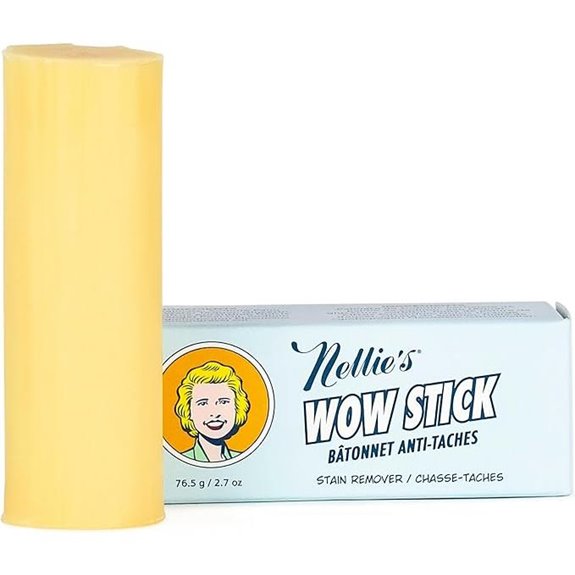
Nellie’s Wow Stick Stain Remover for Fabrics (2.7 oz) is the ideal pick if you want a compact, plant-based solution that’s gentle on fabrics yet effective on tough grease stains. You’ll appreciate its plant-based formula, free from synthetic fragrances, dyes, and harsh chemicals, making it a practical alternative to conventional removers. It targets grass, makeup, wine, grease, coffee, blood, and pet stains while helping maintain your clothes’ appearance. Use it as needed, spot-cleaning fabrics, but test a hidden area first. Compact and portable, it’s suitable for home or travel, with lemongrass and sweet orange essential oils for a light scent.
Instant Oil Stain Remover for Clothes (8.72oz)
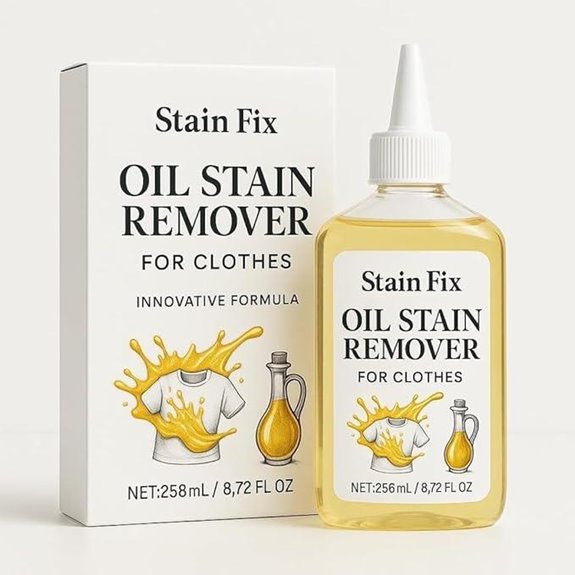
If you’re dealing with frequent oil and grease spills on a variety of fabrics, the Instant Oil Stain Remover for Clothes (8.72oz) stands out for its quick, fabric-safe formula that works on both fresh and dried stains. This stain remover targets cooking oil, essential oil, engine oil, and more, delivering instant results that lift oil deep within fibers. It’s safe for all fabric types, including cotton, synthetics, denim, and delicate materials. Use it by applying, waiting 5–10 minutes, then rubbing with water until the stain disappears before washing. It’s backed by a 100% money-back guarantee for satisfaction.
Tide Ultimate Stain Remover Pack (3)
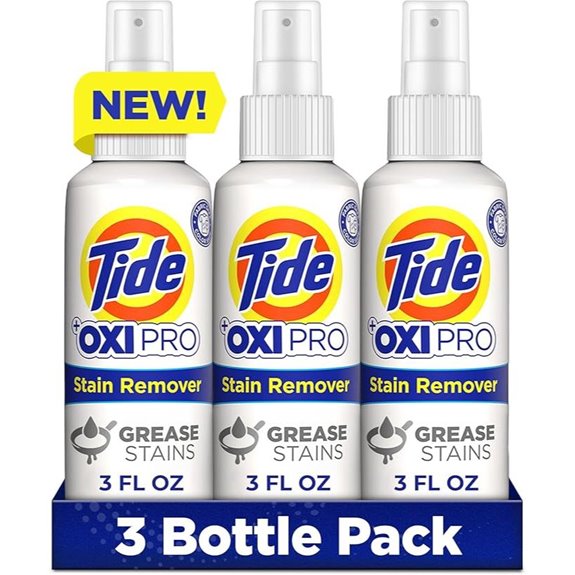
Tide Ultimate Stain Remover Pack (3) is the best pick if you want a targeted grease solution that’s easy to apply and safe on colors. You’ll tackle tough oils, butter, and margarine with an advanced Tide formula that penetrates oily residues for a thorough clean. Application is fast: apply directly to the stain, wait 5 minutes, then wash as usual. For peak results, use hot water, though it performs in cold water too. It’s fabric and color safe, great on colors, cottons, and blends, so you can treat stains with confidence. Built on Tide reliability, it’s a trustworthy choice for greases. Made by Nehemiah Manufacturing.
70409994019
Carbona Stain Devils #6 is a standout choice for grease-related stains on washable fabrics, offering targeted, formula-specific action with three 1.7 fl oz bottles that are easy to spot-treat before laundering. You’ll eliminate stains from makeup, grass, and more, including clay, dirt, food coloring, lipstick, mascara, mud, pollen, toothpaste, and rouge. Safe for hands and dermatologically tested, it’s compatible with cotton, wool, nylon, rayon, polyester, acrylics, and blends, but not silk, carpeting, or upholstery. Follow directions: pre-treat without dilution, place a white cloth beneath, apply, tap, and press, then rinse with warm water. Nine formulas target specific stains.
Carbona Stain Devils #5: Fat & Oil Remover
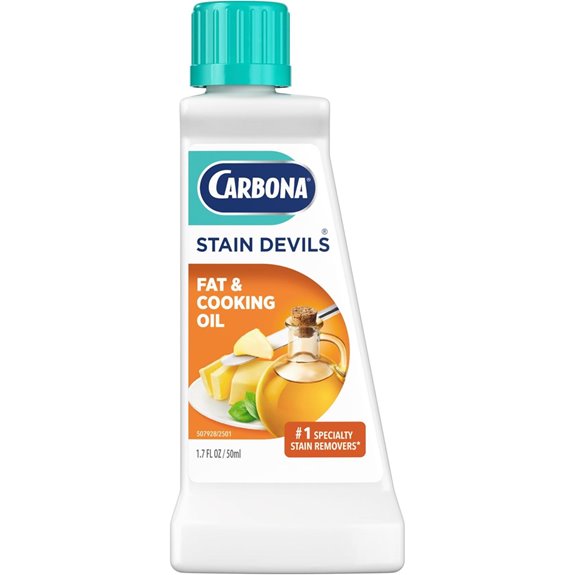
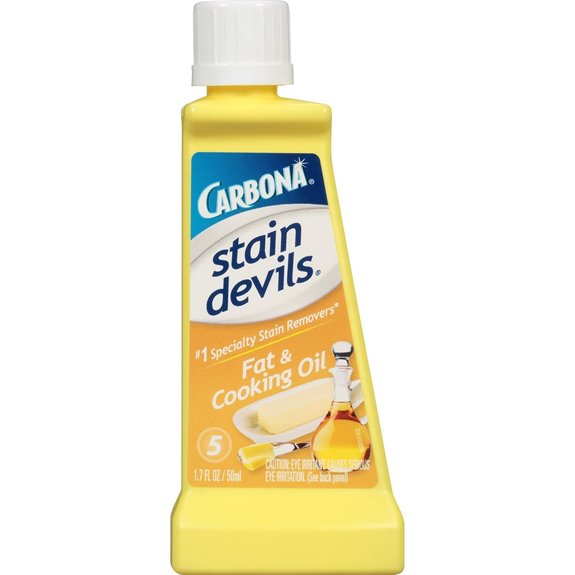
Carbona Stain Devils #5: Fat & Oil Remover is ideal for you if you’re dealing with greasy kitchen stains on washable fabrics and want a targeted solution. This professional-strength laundry stain remover targets fat-based stains like cooking oil and pesto, and works as a multi-fabric cleaner. It’s dermatologically tested, safe for hands, and environmentally friendly to dispose of. Use it on washable, water-safe fabrics (excluding silk, acetate, carpeting, and upholstery). To apply, keep the stain undiluted, place a white cloth beneath, apply directly, tap with a finger onto the cloth, then rinse with warm water. Pack size: 1.7 Fl Oz.
Carbona Stain Devils #7: Motor Oil & Tar Remover (3x)
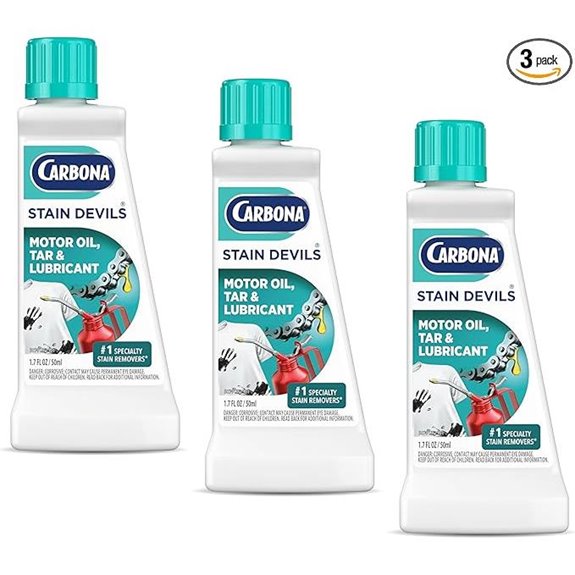
If you’re dealing with stubborn automotive or oily stains, Carbona Stain Devils #7 stands out as a dedicated solution. This professional-strength laundry stain remover targets motor oil, tar, and lubricants, making it a go-to for grease-heavy fabric challenges. You apply it directly to the stain—no dilution—then blot with a white absorbent cloth and push the pigment into the fabric’s fibers. Rinse with warm water after treating. Safe on hands and washable fabrics, it works across cotton, wool, nylon, rayon, polyester, acrylics, and blends, but avoid silk, acetate, carpeting, and upholstery. Choose this 3x 1.7 Fl Oz pack for repeat use.
CHOMP! Concrete Oil Stain Remover 32 Fl Oz
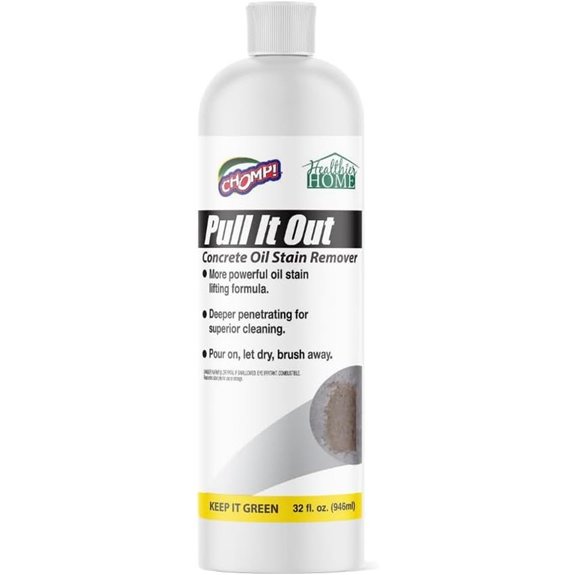
CHOMP! Concrete Oil Stain Remover 32 Fl Oz digs in deep to lift oil and petroleum-based stains from porous floors like concrete and brick. Its deep-penetrating formula draws out contaminants as it dries, using poultice technology to handle varied concrete conditions. It’s effective on transmission fluid, brake fluid, and similar oils in driveways, garage floors, parking lots, and drive-through lanes. Safe and simple, it avoids bleach, acid, and hazardous materials. To use, pour a small amount on the stain, cover, and let dry; brush away like chalk dust to reveal a stain-free surface. Ideal for home and business use.
Factors to Consider When Choosing Stain Remover for Grease Buildup
When you pick a stain remover for grease buildup, consider the stain type it targets, so you doesn’t waste time on products that won’t help. Check fabric compatibility and the application method to ensure it fits your surfaces and routine. Also weigh safety and odor, plus how versatile the product is for different jobs around your home.
Stain Type Targeting
Stain type targeting matters because grease isn’t a one-size-fits-all problem. Many removers specialize in oil-based stains like cooking oil, motor oil, and grease rather than universal formulas, so you’ll want a product matched to the stain you face. You’ll often find direct-application options—apply, let sit 5–10 minutes, then rinse or wash—to lift embedded oils efficiently. Multi-formula sets, like Stain Devils, tackle specific grease categories (fat/oil, makeup, grass) for more precise treatment, which can boost results on stubborn spots. Fabric safety varies; most are safe for washable fabrics, but many exclude silk, acetate, and some delicate materials. For heavily-set oils, hot water washing is sometimes recommended to maximize removal and prevent re-deposition.
Fabric Compatibility
Fabric compatibility matters because grease stains aren’t the same—and neither are fabrics. Some stain removers are safe for washable fabrics (cotton, synthetics, blends) while excluding delicate materials like silk or bamboo, impacting compatibility with grease-borne stains. Other formulas are labeled safe for all fabric types, including cotton tees and denim, enabling versatile treatment of oil and grease stains. Fabric compatibility often specifies exclusions (silk, acetate, upholstery), guiding whether a product can treat grease on more delicate or non-washable items. Pre-treatment and testing on an inconspicuous area are recommended to ensure fabric colorfastness before applying grease-focused removers. Multi-formula stain devils target specific grease or fat stains (butter, cooking oil, motor oil) and are designed for washable fabrics, emphasizing fabric-safety considerations.
Application Method
Applying the right method matters: start by pre-treating the grease directly, letting the remover sit for 5–10 minutes before rubbing with water until the stain fades. You should pre-treat using an absorbent white cloth beneath the stain to catch removed grease, preventing transfer to other areas. After treatment, rinse with clean water and wash normally—either by machine or by hand—for best results. If a stain persists, repeat the application and rubbing step 2–3 times as needed, without rushing. Choose formulas labeled for oil/grease targets and ensure fabric compatibility to avoid damage. Always follow product instructions for contact time and dilution. This method emphasizes direct pre-treatment, controlled rubbing, and thorough rinsing to maximize grease removal and protect fabrics.
Safety And Odor
When evaluating stain removers for grease buildup, safety and odor should top your checklist. Some products use essential oils—lemongrass or sweet orange—for a light scent that fades, which can be gentler on sensitive noses than strong fragrances. Safety notes often recommend testing on a hidden fabric area first to prevent adverse reactions with dyes or fabric types. Many formulas are dermatologically tested and labeled as suitable for hands, aiming to minimize skin irritation during use. For odor, you may find odor-neutral or mild-scent options, though intensity can vary and linger briefly after application. Some removers emphasize being free from harsh synthetic fragrances or dyes to reduce potential irritation and allergic reactions.
Use Case Versatility
Grease buildup demands a stain remover that works across fabrics and situations, not just one kind of stain. Look for formulas labeled effective on grease and oil stains, since lipid residues require solvents that break them down. Prioritize multi-fabric or all-fabric options to ensure compatibility with a variety of textiles you encounter in grease exposure. Consider products that specify oil-based targets—like cooking oil, motor oil, or grease—to guarantee strong performance on greasy buildup. Check application steps that allow direct stain treatment with minimal dilution and a sit-and-rub or rinse routine for deep penetration. Favor removers offering clear usage guidelines—pre-treat, wait time, and repeatability—to handle both fresh and dried grease without guesswork.
Price And Value
Price and value hinge on both cost per use and practical effectiveness. When you compare price-to-size, larger bottles like 8.72 oz give more product per dollar than small 1.7 oz options, potentially lowering your cost per use. Consider multi-pack value too; bundles such as 3 x 1.7 oz spread the upfront price and keep grease-focused supplies handy. Specialized grease/oil formulas can justify a higher price if they deliver targeted results on oil-based stains. Look for money-back guarantees, like a full refund, to reduce financial risk while evaluating value. Packaging matters as well: compact, travel-friendly containers lower opportunity costs for on-the-go grease removal compared with bulky bottles. Balance upfront cost with long-term effectiveness for the best value.
Commonly Asked Questions
Are These Removers Safe on All Fabric Types?
Yes, not all removers are safe on every fabric. Check labels, test on a hidden spot, and use lowest recommended setting. For delicate fabrics, choose stain removers labeled safe for that material, or opt for gentler alternatives like enzymes or cold-water pretreatments. Avoid chlorine bleach on colors or synthetics. If you’re unsure, spot-test, air-dry, and run a small wash cycle to verify no damage occurs.
Do They Require Pre-Soaking for Grease Stains?
Grease stains usually need pre-soaking, yes. You’ll want to pretreat with a stain remover or a bit of liquid detergent, then soak in warm water for 30–60 minutes before washing. Some fabrics tolerate longer soaks, but test a hidden area first. If the stain lingers, repeat pretreat and soak. Avoid hot water on grease, as it can set it. Dry normally, and air-dry delicate fabrics.
Can They Remove Old, Set-In Grease Stains?
Yes, they can remove old, set-in grease stains, but results vary by fabric, stain age, and product. You should test a hidden area first, then use a grease-focused remover or enzyme-based cleaner, following label directions. Apply, blot, and gently rub, letting it sit as recommended before washing in the hottest safe water. For stubborn spots, repeat and consider professional cleaning for delicate fabrics. Air-dry to check if the stain’s gone before a full wash.
Are There Environmental or Septic-Safe Options?
Did you know 80% of households say septic systems struggle with harsh cleaners? Yes, there are environmental and septic-safe options. Look for enzymatic or oxygen-based stain removers labeled septic-safe, biodegradable, and phosphate-free. You’ll want to avoid chlorine bleach on septic systems, and use cold-water cycles when possible. Test on a hidden area first, and follow product directions. For grease, pre-treat, then launder at the hottest safe setting.
How Should I Test Colorfastness Before Use?
To test colorfastness, patch test first on an inconspicuous area. Apply a small amount of the cleaner, wait the recommended time, then rinse and blot dry. Check for color transfer or fading; if none, proceed cautiously. Use diluted solutions when in doubt, and avoid heat which can set stains. If color shifts occur, stop and consult product guidelines. Always wear gloves and ventilate areas well during testing.