
Like a beacon in a cluttered kitchen, you’ll want a stain remover that tackles organic grime without harsh fumes. You’re balancing probiotic enzymes, biodegradability, and safe use, all while keeping odors at bay. Which formula fits your trash cans—spray bottles, odor absorbers, or latex paint removers—will hinge on how easy it is to apply and how well it works across surfaces. Stay tuned to find your best match.
Important Facts
- Probiotic enzyme cleaners target odor at the source, helping keep trash cans fresher longer with biodegradable formulas.
- Choose ready-to-use or spray bottles to avoid messy mixing and ensure easy post-use application.
- Look for low-VOC, non-toxic, and pet/kid-safe options to maintain indoor air quality and safety.
- Odor absorption plus deodorization is ideal; prioritize products that both absorb liquids and neutralize smells.
- Verify surface compatibility (plastic, metal, coated) and provide clear dilution guidance for concentrated formulas.
Probiotic Enzyme Cleaner — Pet Stain & Odor Remover (Lavender)
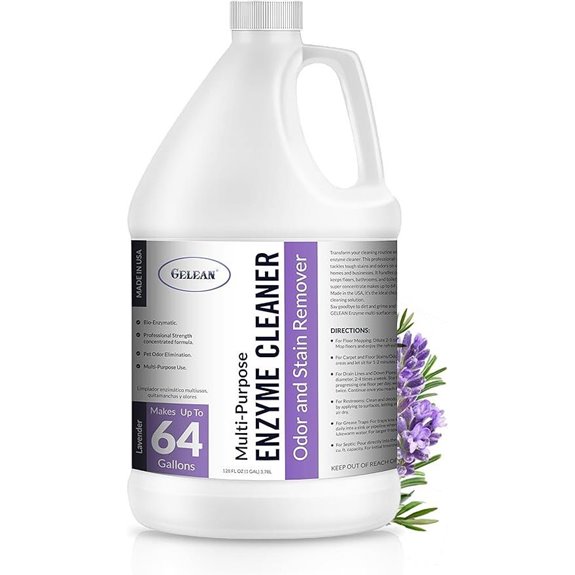
If you’re after a probiotic, enzyme-based cleaner that tackles trash can grime without masking odors, the Probiotic Enzyme Cleaner — Pet Stain & Odor Remover (Lavender) stands out. This multi-purpose cleaner uses natural enzyme-producing probiotics to break down stains, grime, and organic matter at the microscopic level, delivering real odor elimination rather than masking it. Safe for regular use, it’s a concentrated gallon suitable for drains, floors, bathrooms, toilets, and trash cans. It’s made in the USA and offers professional and home-strength performance on tile, porcelain, concrete, and sealed floors. Lavender fragrance adds a fresh note while you clean.
Stain Remover Trial Pack with Spray Bottle
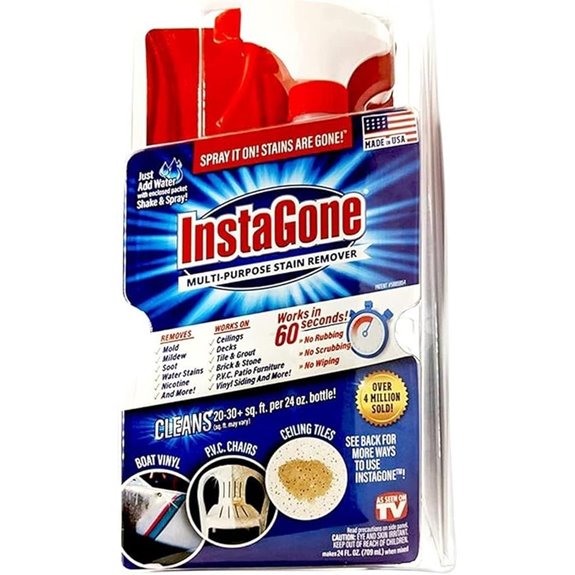
This Stain Remover Trial Pack with Spray Bottle stands out for budget-conscious cleaners who want a ready-to-use, multi-surface solution. You get a 0.8 oz trial pack, a 24 oz spray bottle, and a water-ready bottle for immediate use, plus a refill option for ongoing use. It’s not a laundry detergent, nor for carpet, clothing, or upholstery. Use it on sinks, ceilings, walls, roofs, showers, and bathrooms, indoors or outdoors. The formula is new and improved for tougher stains, delivering broad surface coverage—from floors to ceilings. This economizes time and money, simplifying your cleaning routine with one versatile product.
Trash Can Deodorizer 24 oz – Biodegradable Odor Absorber
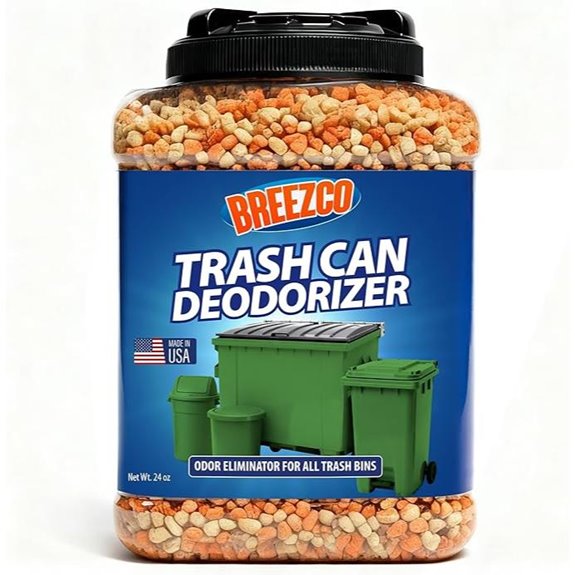
Trash Can Deodorizer 24 oz stands out for eco-conscious homes seeking a simple, effective odor solution that also absorbs moisture. You’ll get a biodegradable, dual-action formula that deodorizes and absorbs liquid waste, keeping bins cleaner and drier after every use. It instantly neutralizes tough garbage smells from indoor or outdoor trash cans, dumpsters, and bins without aerosols or overpowering perfumes. Easy to use—simply sprinkle or pour after each use. Safe and non-toxic for pets, kids, and the planet, it’s designed for eco-friendly freshness, reducing odors naturally while absorbing moisture for a cleaner trash area.
Motsenbocker Lift Off Latex Paint Remover Spray
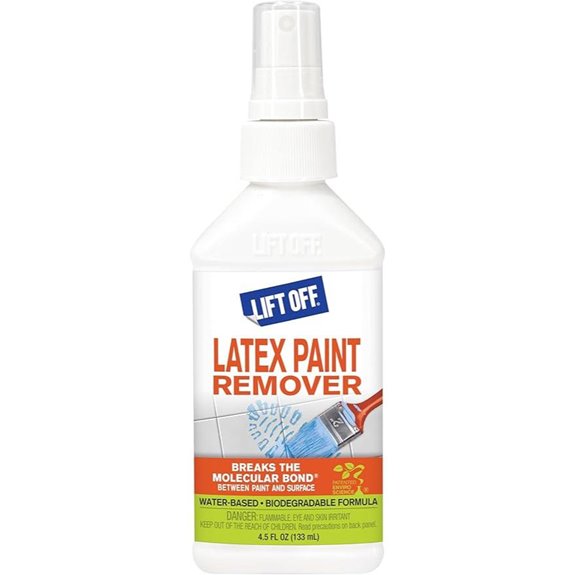
Motsenbocker Lift Off Latex Paint Remover Spray stands out for a low-VOC, non-toxic formula that tackles latex, acrylics, enamels, and stencil paints while remaining safe for people, pets, and most surfaces. You can use it on dried or fresh paint, and it breaks molecular bonds for easy removal, making spills, overspray, and cleanup simple. This water-based, biodegradable spray is safe on walls, carpet, concrete, brick, tools, fabric, vehicles, and more, with minimal fumes. It keeps paint solid for trash-ready disposal, and you’ll find it practical for brushes, rollers, pans, and surface restoration without damage. Made in the USA, model 41345.
Carbona Stain Scrubber: Bio-Enzyme Stain Remover 8.4oz
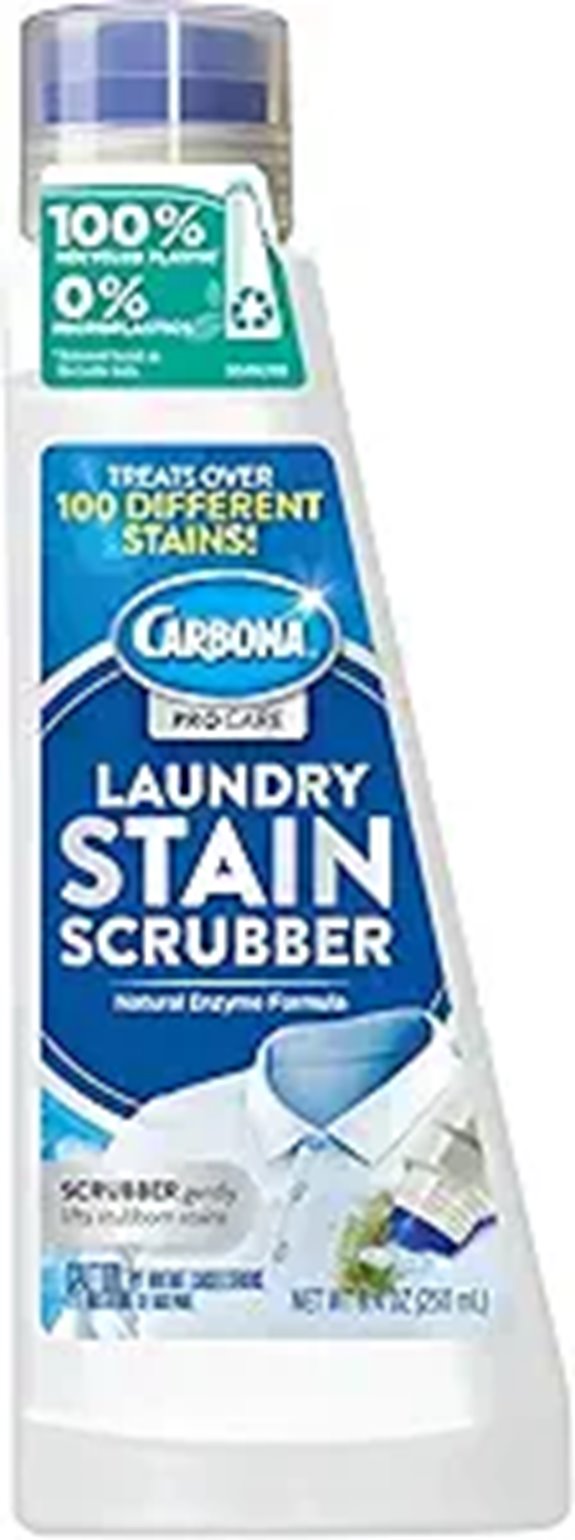
Looking for an all-in-one stain remover that tackles tough spills on washable fabrics? Carbona Stain Scrubber uses natural bio-enzymes with an extra-strength formula and a brush-top applicator. This 8.4oz bottle is designed for wide-range stains—from grease, oil, and fat to protein-based messes like blood or milk, plus fruits, ketchup, vegetables, and baby foods. Safe on fabrics like cotton, wool, nylon, rayon, polyester, acrylics, and blends (excludes silk, acetate, carpeting, upholstery). Dermatologically tested and safe for hands, it’s used by applying to the stain, working in with the brush, setting 10 minutes, then washing per label. For stubborn cases, consider Stain Devils.
CloroxPro Urine Remover for Stains and Odors
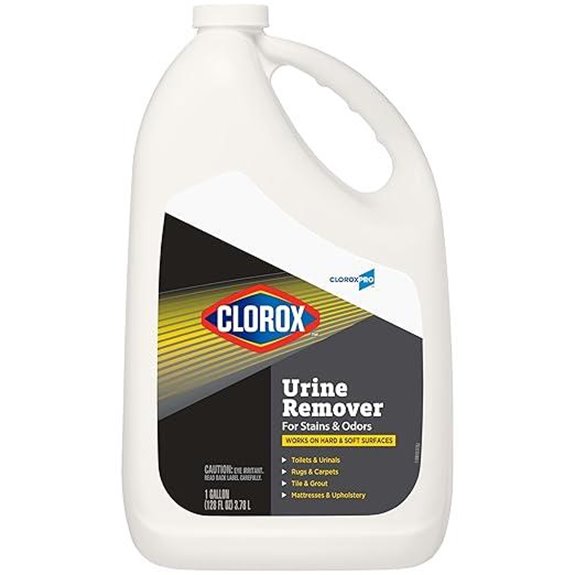
CloroxPro Urine Remover for Stains and Odors stands out for commercial-grade strength that targets uric acid crystals with hydrogen peroxide, making it a solid choice for trash-can areas in high-traffic settings. You’ll break down urine to eliminate odor rather than mask it, with stain removal from the hydrogen peroxide cleaner. It’s safe on most hard and soft surfaces, including carpet and upholstery, and it treats grout and other porous areas. Ideal for commercial use—schools, restaurants, hotels, and outdoor spaces—this 128-ounce refill suits large-scale pre-treatment, laundry, and pet or bodily-fluid cleanup needs. Manufacturer support available at 1-800-227-1860.
Multi-Purpose Probiotic Enzyme Cleaner, 128 oz Citrus
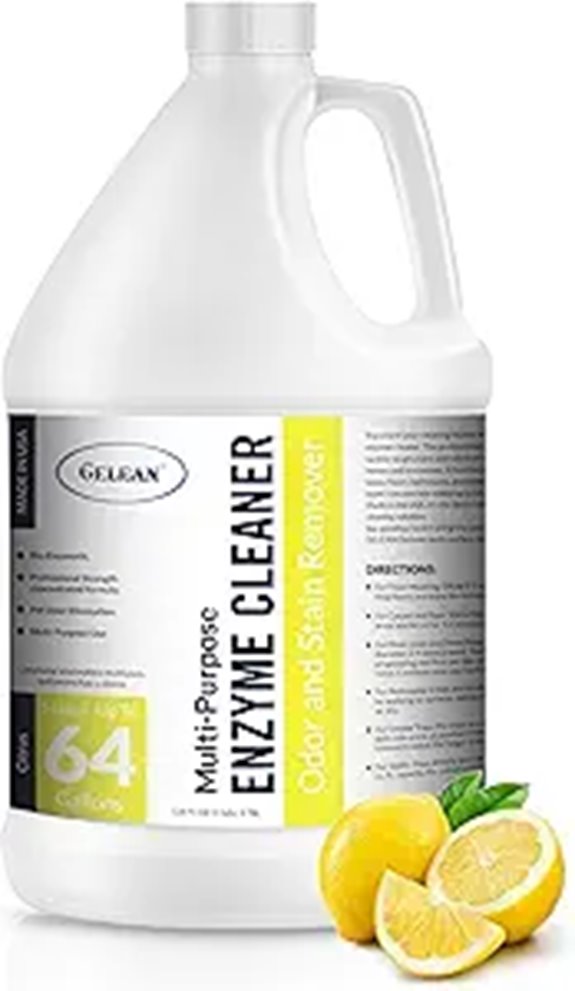
If you’re tackling stubborn trash-can odors, the Multi-Purpose Probiotic Enzyme Cleaner, 128 oz Citrus stands out for its probiotic enzyme formula that breaks down organic grime at the source. This concentrated, gallon-size cleaner is made in the USA and safe for regular use. It’s a multi-surface solution designed for floors, bathrooms, toilets, drains, and trash cans, delivering professional-strength cleaning power without masking odors. It neutralizes pet smells and waste-related scents by breaking down stains at a microscopic level with probiotic enzymes, rather than relying on chemical masking. Ideal for both commercial and residential applications, it’s versatile and effective.
Factors to Consider When Choosing Stain Remover for Trash Cans
When you pick a stain remover for trash cans, start with odor neutralization power and how it handles lingering smells. Consider the surface compatibility range, and whether you prefer probiotic cleaners or stronger chemical formulas for tough stains. Also weigh application method ease, safety and biodegradability to keep your cans clean without compromising family or the environment.
Odor Neutralization Power
Odor neutralization hinges on addressing both the source and the smell itself. You gain faster results when a cleaner targets the odor at its origin, not just with a fragrance. Look for formulas that break down organic waste with probiotics or enzymes, reducing the source of odor rather than masking it. Biodegradable odor absorbers offer instant relief from strong garbage smells while also absorbing liquids, helping keep bins drier. Hydrogen-peroxide-based cleaners tackle urine odors by removing uric acid and related bacteria, improving sanitation and odor control. An effective trash can deodorizer balances rapid neutralization with safety for pets and kids, plus minimal residual scent. Prioritize products proven to neutralize odors at the microbial level and curb reoccurrence.
Surface Compatibility Range
Choosing a stain remover with the right surface compatibility matters for trash cans and nearby areas. You want a product that works on trash cans and related interior/exterior containers, including plastic, metal, concrete, tile, and sealed floors. Look for formulas that specify safe use on hard non-porous surfaces (tile, porcelain, concrete) and also on porous areas like grout or seals nearby. For trash cans, prioritize multi-surface cleaners (floors, drains, trash cans) to clean effectively without damaging surrounding materials. If the product targets outdoor bins, verify it mentions hard non-porous outdoor surfaces in addition to indoor surfaces to cover all environments. Avoid formulations limited to fabrics, carpets, or upholstery when cleaning trash cans and lids; seek safe options for hard surfaces and common interiors.
Probiotic Versus Chemical
Probiotic stain removers use beneficial microbes to digest organic matter, tackling odors at the source rather than just masking them. You’ll get long-lasting odor control, since these formulas continuously neutralize waste residues as they work. They’re generally safer for regular, multi-surface use and may be biodegradable, reducing harsh chemical exposure in your trash can routine. Chemical stain removers rely on active agents like hydrogen peroxide or solvents to break bonds and remove stains quickly, often delivering stronger immediate whitening or degreasing effects. They can be more aggressive, sometimes requiring ventilation and protective measures, especially on porous or sensitive surfaces. In trash cans, probiotics target odor origins, while chemicals focus on instant deodorizing and stain removal, guiding your choice based on priorities and environment.
Application Method Ease
When you pick a stain remover for trash cans, ease of use should top your list: look for products that you can apply directly after use with a sprinkle, pour, or spray, minimizing steps and downtime. Favor formulations that come in ready-to-use bottles or included spray bottles to avoid mixing or additional containers. If the product is concentrated, ensure there are clear dilution instructions and a straightforward measuring method to prevent over- or under-use. Choose options that offer a mess-free application with no need for pre-wetting or special tools, enhancing quick turnaround after each can-emptying cycle. Prefer packaging that clearly indicates how to apply on both interior bins and exterior lids, ensuring effectiveness on multiple trash can surfaces.
Safety And Biodegradability
Is safety and biodegradability a priority when selecting a trash can stain remover? You should prioritize biodegradable formulations that break down naturally, reducing persistence and ecological impact versus non-biodegradable cleaners. Look for non-toxic or safe-for-pets/kids claims, signaling lower risk of harmful exposure in trash can use. Favor water-based, low-VOC products to minimize volatile emissions during use and storage. Biodegradability often pairs with odor control, so you can reduce reliance on masking fragrances while still keeping the area fresh. Seek explicit safety certifications or statements confirming the formula is biodegradable and free from harsh indoor chemicals. This combination supports safer, cleaner operations without compromising environmental responsibility or indoor air quality.
Concentration And Dilution Check
Concentration and dilution matter because they determine both cleaning power and cost per use. Your choice shapes how much product you need per job and how many uses you’ll get from a bottle. Higher concentration often boosts cleaning strength, but it may demand precise dilution to avoid residue or surface damage. Follow the water-to-cleaner ratio guidance because it ensures effective odor and stain removal without waste. Some products are concentrated yet paired with ready-to-use spray bottles, while others require mixing before each use. Always verify the final working dilution is appropriate for trash can interiors and for the specific material—plastic, metal, or coated surfaces. When in doubt, test a small area first and adjust accordingly.
Commonly Asked Questions
Are Probiotic Cleaners Safe for Food-Contact Surfaces?
Probiotic cleaners can be safe for food-contact surfaces when they’re EPA-registered and labeled for that use. You’ll want to follow the product’s directions and allow proper contact time. They’re built to outcompete odors and grime, not leave harmful residues. Still, rinse with water if you’re unsure, and avoid mixing with bleach or ammonia. If you have sensitive skin or allergies, wear gloves. When in doubt, test on a small area first.
How Often Should I Replace Trash Can Liners With Cleaners?
You should replace trash can liners weekly or whenever they’re visibly soiled or leaking. Use cleaners as you scrub the can’s interior, then rinse and dry before lining again. If you’re handling frequent spills or compost residues, swap liners daily in hot weather or for high-traffic spaces. Keep a spare supply handy, and avoid mixing cleaners with bleach unless the product label says it’s safe. Always sanitize after removing each liner.
Do Spray Bottle Sizes Affect Cleaning Power?
They do, somewhat. Spray bottle sizes can affect ease of use and dosage, but not cleaning power itself; the formula does the work, and you control how much you apply. Bigger bottles save trips, smaller ones boost precision, yet each delivers the same active ingredients. To maximize efficiency, follow label directions, pre-wet stubborn spots, and let it sit. Reapply as needed, and rinse well for fresh, odor-free results.
Can These Products Remove Mold From Can Lids?
Yes, some can remove mold from can lids. Look for products labeled antifungal or mold-killing, and use them as directed. Start by scrubbing with a brush and hot water, then apply the cleaner, letting it sit for the recommended time. Rinse thoroughly and dry completely to prevent regrowth. For stubborn spots, repeat once and consider a sealant afterward to deter future mold. Always vent and wear gloves.
Are Scented Cleaners Okay for Allergy Sufferers?
Scented cleaners aren’t ideal for allergy sufferers; they can trigger sniffles and sneezes. If you’re sensitive, opt for fragrance-free options or products labeled hypoallergenic. You’ll still get the cleaning punch without the perfume cloud, like hiking with a clear breeze instead of a pollen buzz. Always check ingredients for irritants, and vent the space well. You can stay fresh and hopeful, just with fewer chemical cues to irritate your airways.